
Hospitality industry analysts predict an up-and-down year in 2026. Luxury hotel segments are thriving; the budget segment is slowing. AI is becoming essential to operations, and ESG (environmental, social, and governance) metrics are mandatory.
That’s the big picture. But what about what guests want? Let’s dive into the macro and micro trends that are shaping hospitality.
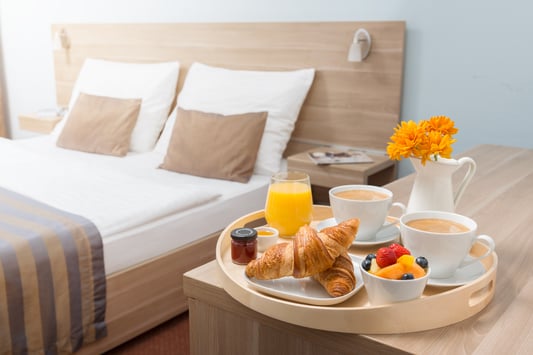
Operations and guest services trends in the hospitality industry
New focus on agentic AI in hospitality
Guests are already using AI to research and plan their travel. The next wave is agentic AI: using AI to actually book hotels and make other decisions. Agentic AI has a memory and the capability to execute complex assignments. For instance: An entrepreneur with limited physical mobility might use agentic AI to plan her business travel, assigning it to identify and book the best hotel with accessible rooms and healthy meal options nearby.
On the hotel operations side, agentic AI can be used for predictive maintenance, housekeeping management, and even menu optimization. Read McKinsey’s overview of how hotel operators can put these new tools to work.
Playful hotel wellness programs
The popularity of wellness tourism continues to climb. In recent years, hotels have leaned into highly customized, health-data-driven experiences for guests. One of the latest trends in hospitality is mixing wellness with social activities and entertainment.
In Türkiye, the Scorpios Bodrum resort offers yoga and sound baths by day and DJ-led revelry at night. European spa resorts are offering aufguss: 15-minute music and/or theater performances held in a large communal sauna. Why not make hotel wellness programs fun?
Serious sustainability commitments
“2026 marks the end of voluntary sustainability disclosure,” asserts hospitality consultant Sotiris Milonas. It’s not enough to make vague claims; hotels “need audit-grade ESG data aligned with CSRD [the EU’s Corporate Sustainability Reporting Directive], covering energy, water, waste, emissions, DEI, and supply chain practices — with the same integrity as financial data.”
Food waste management is a significant part of hotel sustainability certification. Need some tips to help your property hit its goals? Download the Strategy Guide for Foodservice Sustainability.
Strategic investment in hotel upgrades
Hospitality industry experts predict that new hotel construction will slow in 2026. That means operators may want to plan renovations this year, says Jan Freitag, the national director for hospitality market analytics at CoStar. “After all, in many markets, a newly renovated property will not face new competitors for a while, allowing operators to maintain a competitive edge against their competition.”
Don’t have the budget for a full interior renovation? Some simple guestroom upgrades can make a big difference. For example:
-
- Replacing towels
- Installing better showerheads
- Upgrading the in-room coffee maker
- Adding a tea kettle
- Replacing hair dryers (yes, hotel hair dryers really matter for guest satisfaction!)
F&B trends in the hospitality industry
Small tastes instead of big plates
When food costs are high and customers are reluctant to spend, what can hotel operators do? One answer: smaller servings. Instead of $25-$30 (€21-25) entrees, offer $10 (€8) appetizers or tapas. (The increasing popularity of appetite-reducing GLP-1 medications is another driver of the small-servings trend.) Guests also enjoy shareable options, such as build-your-own snack boards and multi-person aperitivo boxes.
Unified menus
If your hotel property has multiple restaurants/bars, do you really need multiple menus? Maybe not. Executive Chef Adam Korbel of New Orleans’ NOPSI Hotel oversees three F&B outlets: the rooftop pool bar, Henry’s Gin Bar, and Public Service, the hotel’s main restaurant. Rather than develop a distinctive menu for each, he created one crowd-pleasing collection of local favorites, like crawfish hushpuppies, a po’boy sandwich, and shrimp and grits. “That way, we're streamlining everything, and you're able to use everything on one menu completely," Korbel said.
Mini cocktails at the hotel bar
Drinks are also shrinking. The Eventi Hotel in New York City added a half-size martini to the menu at its Back Bar. Beverage Director Jason Hedges says the bar sells about 35 of these mini martinis a week compared with 75 or 80 regular size martinis. Consider adding mini drinks to your happy hour menu to bring customers in. The Fleur Room, a glass-enclosed lounge in New York’s Moxy Hotel, offers mini martinis for $9 (€7) and flights for $23 (€19) on weeknights.
Local specialties and comfort foods
Hilton’s 2026 hospitality trends report uncovered a few interesting truths about what guests like to eat. “For 79% of travelers, familiar menu items serve as a source of comfort, even miles away from home,” Hilton’s research found. The takeaway: Even if the rest of your menu takes culinary risks, it’s always wise to include some crowd-pleasing, homestyle favorites. Depending on where your guests call home, that might be congee, macaroni and cheese, pizza, or butter chicken.
Guests also want to try new things, however. 77% of travelers enjoy exploring grocery stores to try authentically local food and drink offerings, Hilton reports. Consider adding local treats to the lobby market, or regional specialties to the breakfast bar.


